Occasions
Tuxedo or Evening Suit: What to Wear to a Gala

Related to this article:
Explore the collectionA gala, an awards ceremony or a charity evening calls for a more formal register than a wedding or a business dinner: that of the tuxedo, also called black tie. Unlike a business suit, this wardrobe follows precise codes, inherited from 19th-century evening dress, which leave far less room for personal interpretation.
The tuxedo: the pieces that make it up
A tuxedo consists of a black or midnight blue jacket with silk lapels (satin or grosgrain), matching trousers with a side stripe, a white shirt with a bib front and wing or turndown collar, a black bow tie, and a cummerbund or a waistcoat — never both together. Cufflinks and patent or very fine leather shoes complete the outfit. Every piece answers to the others: improvising just one is enough to break the balance of the whole.
When is a tuxedo actually necessary
"Black tie" on the invitation makes the tuxedo mandatory, no exceptions. "Black tie required" is a strict equivalent. Without any mention, but facing a gala or a prestigious awards ceremony, a tuxedo remains the safest choice: no one will ever fault you for wearing one in that context, unlike a plain suit that might look underdressed.
The evening suit: the alternative for less formal events
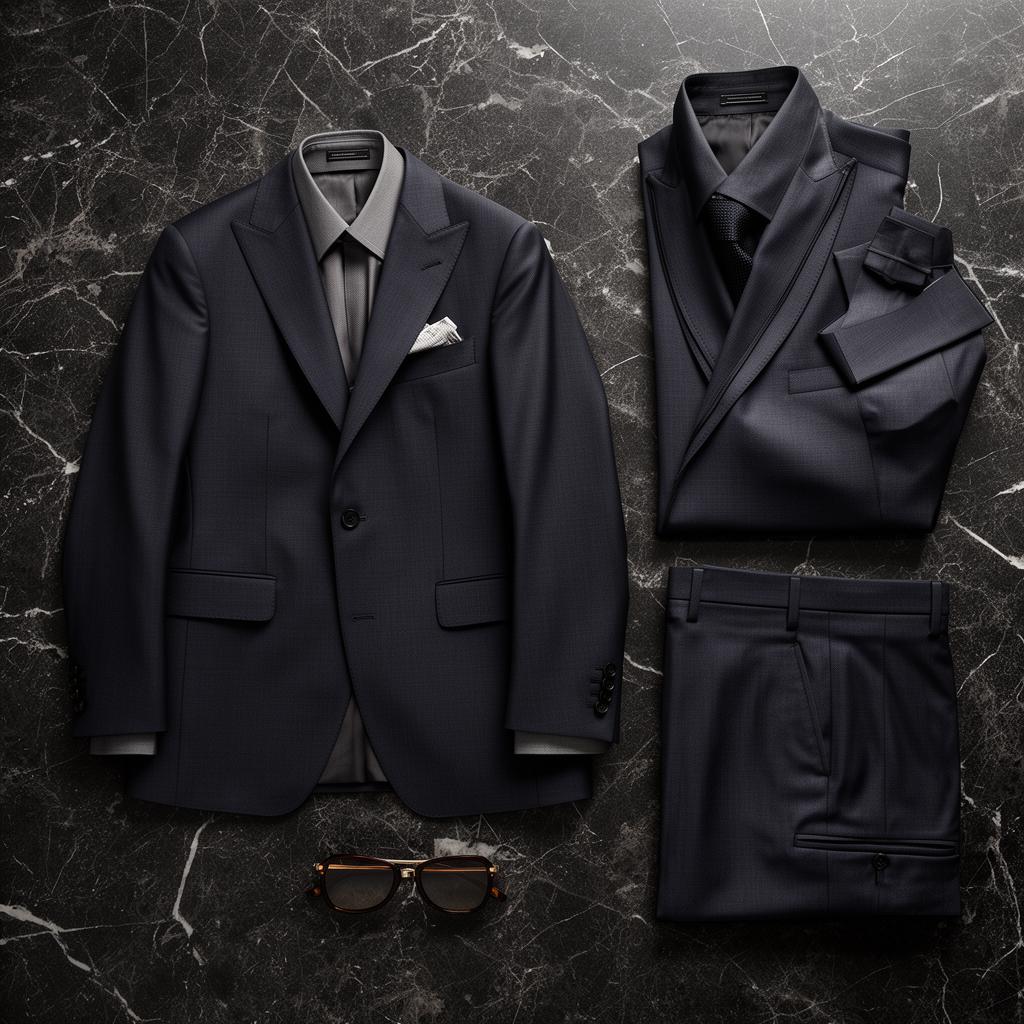
For an elegant evening that doesn't explicitly mention black tie, an evening suit — a dark suit, often in wool with a slightly more lustrous finish, white shirt and a discreet tie or bow tie — makes an excellent compromise. It marks the solemnity of the occasion without the full formality of a tuxedo, for events such as a gala concert or a foundation dinner.
- Explicit black tie on the invitation: tuxedo mandatory, no room for negotiation.
- Prestigious gala with no explicit mention: a tuxedo remains the safest choice, even if slightly more formal than the average guest.
- Elegant evening with no mention of black tie: dark suit, white shirt, discreet tie or bow tie.
- Never a long tie with a tuxedo: it's the most visible and most common mistake among the uninitiated.
When torn between two registers, it's always better to lean towards the more formal one: you can always take off your jacket or loosen your bow tie during the evening, but you can never make up for an outfit that was too casual for the occasion.
Frequently asked questions
Can I wear a classic navy suit instead of a tuxedo for a gala?
Only if the invitation doesn't specify "black tie". In that case, a well-cut dark evening suit remains acceptable, but a tuxedo will always be better suited to a prestigious gala.
Should the bow tie be hand-tied or pre-tied?
A hand-tied bow tie remains the reference for a traditional tuxedo — a slight, deliberate asymmetry in the knot is even seen as a sign of authenticity, unlike the perfect symmetry of a pre-tied model.
What's the difference between a tuxedo and an evening suit?
A tuxedo follows strict codes (silk lapels, bib-front shirt, bow tie) while an evening suit is a classic dark suit worn with extra care, without the specific codes of black tie.
Want to discover the Maison Smalto collection?
Explore the collection